
 Join the Discord Community server here to have your questions answered, fast support, and talk to other users
A browser-based playground for building and testing BCI decoders. A decoder is a small program — usually a machine-learning model — that looks at those signals and guesses what the person was thinking or trying to do. Streams live data from your Cerelog ESP-EEG, runs a decoder on it, and plots predictions against ground truth side by side. Bring your own decoder in JavaScript or TensorFlow.js, or generate one from a text prompt.
A brain-computer interface game that lets players control Pong paddles using eye movements. Uses electrooculography (EOG) to detect electrical signals from eyeball movement, processes them through a multi-stage signal processing pipeline (filtering, detrending, spike detection), and translates them into real-time game controls. Built with the Cerelog 8-channel BCI board and a Python-based processing pipeline — successfully tested in a competitive tournament with multiple participants.
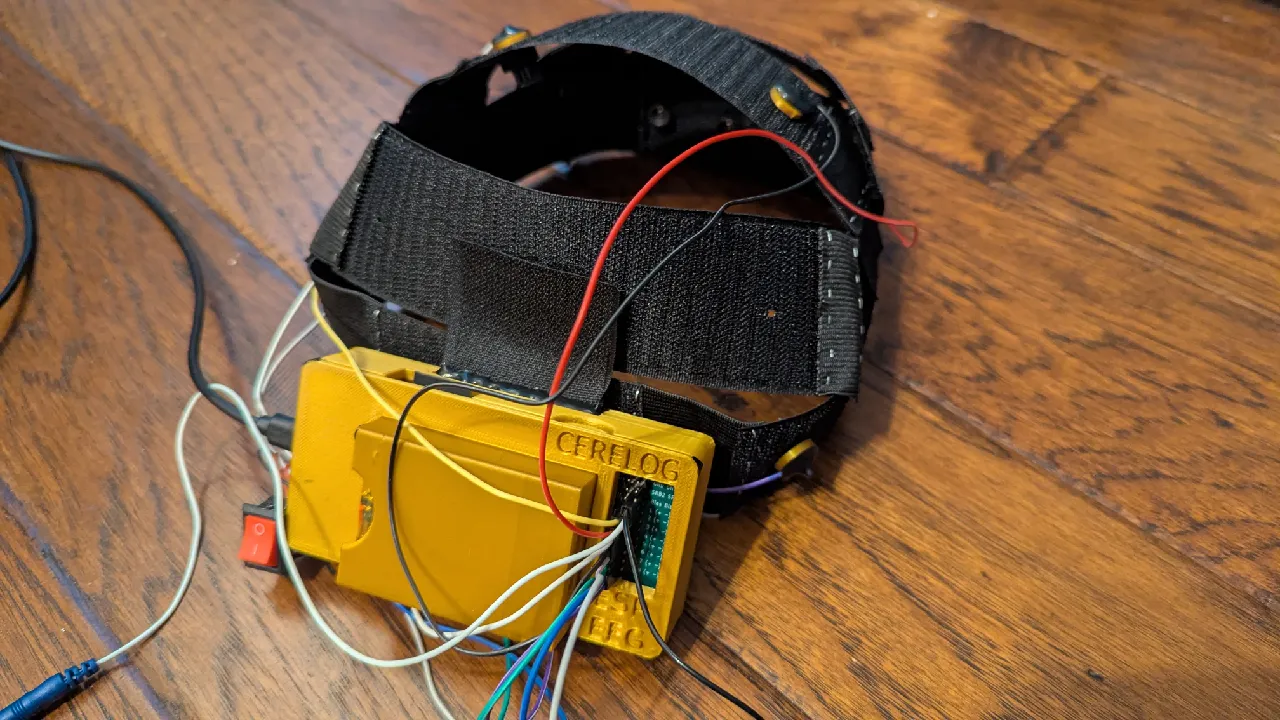
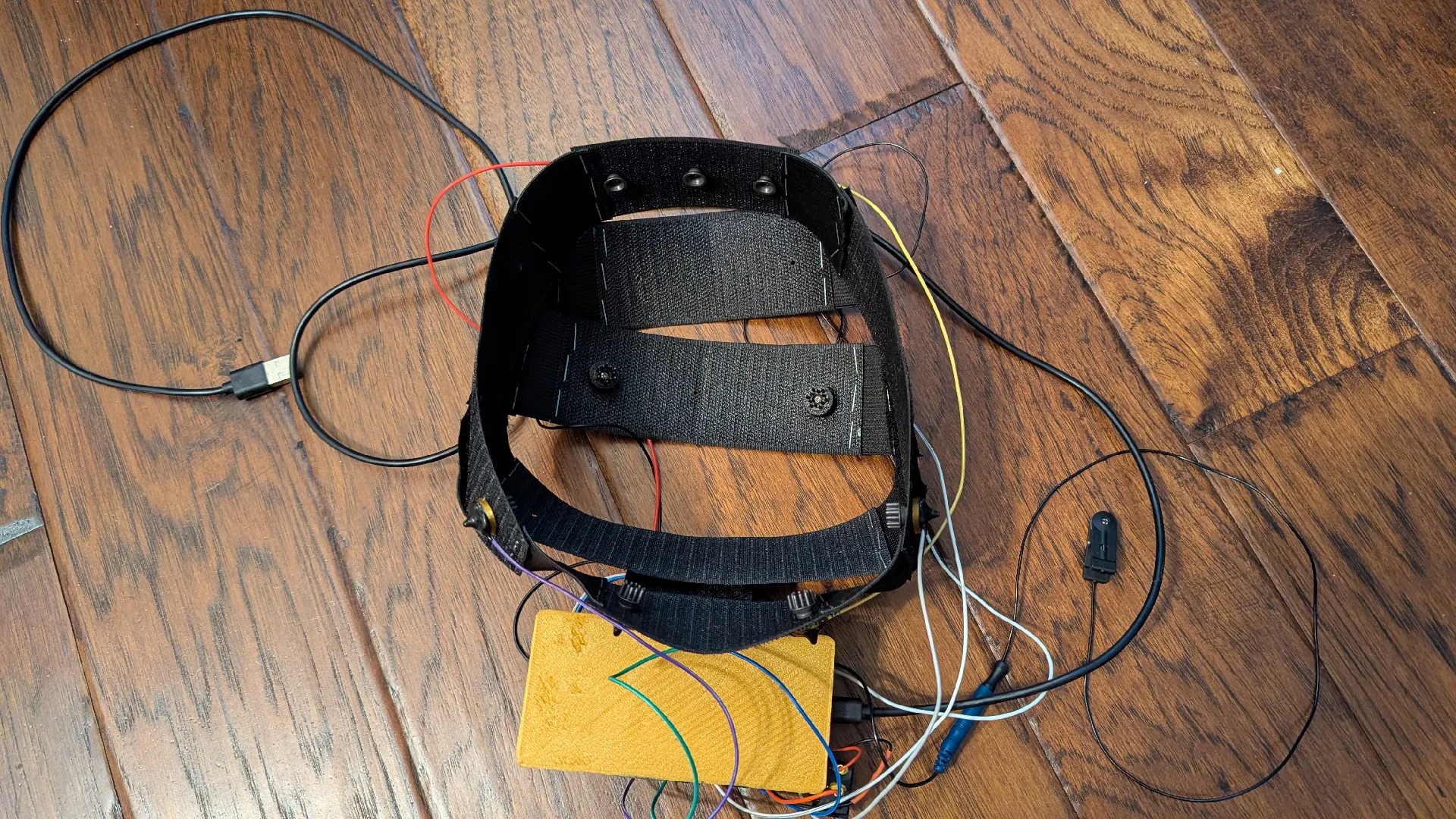
A wearable EEG headband that holds dry electrodes against the scalp at standard 10–20 positions. Unlike rigid 3D-printed EEG caps, the electrode array is built from stapled nylon webbing and elastic band segments — so it flexes to fit the head, packs flat, and is cheap to build and repair. Electrodes mount as a small "sandwich" (dry comb electrode, 3D-printed washer, machine screw, and jumper-wire lead) locked with hot glue. Signals are digitized by a Cerelog ESP-based board housed in a 3D-printed case that velcros to the back of the band.
Includes full assembly guide, STL files for the electrode washer, Cerelog case, and LiPo battery holder, plus a complete bill of materials. Work in progress — designs and instructions may still change.
Custom firmware that turns the Cerelog into a confound and timing recorder instead of an EEG board. Four differential channels record jaw muscle activity at gain 24, and a fifth carries an ALS-PT19 light sensor through a simple voltage divider at gain 1 — so muscle artifact and on-screen stimulus timing land in the same data frame at 1,000 SPS. Built for PRAYCG, an open neuroscience workbench. Package includes full source, binaries, a Python reader, and bench checks.
What's PRAYCG? An open, local-first workbench and protocol for studying how the body and brain respond to meaningful stories. It asks a narrow question: when someone watches a coherent narrative, does their physiological state follow a different path than when they watch the same footage scrambled so the meaning is destroyed, or watch it intact but under an analytic task?